
On the Supplier Data Hub, PPL stands for "Products per Packaging Level".
Recap: Packaging Levels
Primary: Any packaging that the customer will take home, remove & throw away. Usually, the packaging immediately around the product, sometimes known as retail or consumer packaging.
Secondary: Outer packaging, used to protect and group a number of products together, that will be removed before onward sale to the customer. Usually boxes, plastic bags, shelf ready packaging & counter-top display units.
Transit: Pallets, shrink wrap, layer cards & strapping.
Tertiary: Online only packaging. Please do not report tertiary packaging unless you have been asked to do so.
PPLs (Products Per Packaging Level)
Your PPL value should represent the number of end-customer saleable units that are present within each packaging component.
For example, if the product was a tin of soup the packaging profile could look something like this:
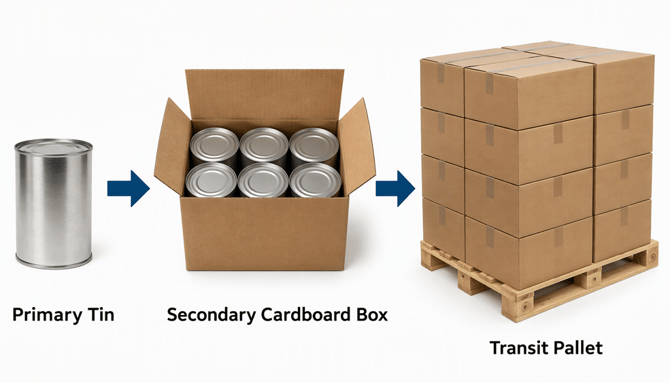
Primary - 1: Because primary packaging is the packaging used at the individual product level, primary PPL values always = 1.
Secondary - 6: If 6 individual cans of soup were stored in a secondary cardboard box, the PPL for the secondary cardboard box would be 6.
Transit: - 96: If 16 boxes were stored per pallet, the PPL for the transit pallet would be 96, because this is the total number of products on the pallet. (6 cans per secondary cardboard box) X (16 boxes per pallet) = 96 total. 96 would also apply to any other packaging at the transit level (wrap, strapping, etc), as anything added here is technically packaging all items on the pallet.
How do I calculate PPLs for multipacks?
Because multipacks are sold as an individual unit, the primary PPL would still = 1. When reporting on a multipack, you should always treat the whole multipack as its own product, not as a collection of individual products.